The perennial struggle of managing children’s toys often boils down to a fundamental storage dilemma: the compact, modular cube organizer versus the classic, open-top toy box. As parents in 2026 navigate the complexities of decluttering, fostering independent play, and maintaining a semblance of order, the choice of toy storage system becomes critical. This isn’t just about stashing toys; it’s about influencing how children interact with their belongings, how easily parents can implement effective toy rotation, and how seamlessly the storage integrates into the home’s overall aesthetic. Both systems have staunch advocates, but a deep dive into their functionalities reveals distinct advantages and disadvantages that can make or break a family’s organizational efforts.
The Core Conflict: Cube Shelves vs. Toy Boxes for Toy Rotation
At the heart of this debate lies the effectiveness of each system in facilitating two crucial aspects of child development and home management: toy rotation and visibility. Toy rotation, the practice of cycling toys in and out of play to maintain child engagement and reduce overwhelm, requires accessible storage. Visibility, the ability to easily see and identify stored toys, directly impacts how efficiently children (and parents) can find what they’re looking for, and how smoothly toy rotation can be implemented. Traditional toy boxes often become black holes where toys disappear, making rotation a chore and finding specific items a treasure hunt. Cube organizers, with their individual compartments, offer a more structured approach, but their effectiveness hinges on the specific design and the family’s discipline.
Understanding Cube Organizer Shelves: Pros and Cons
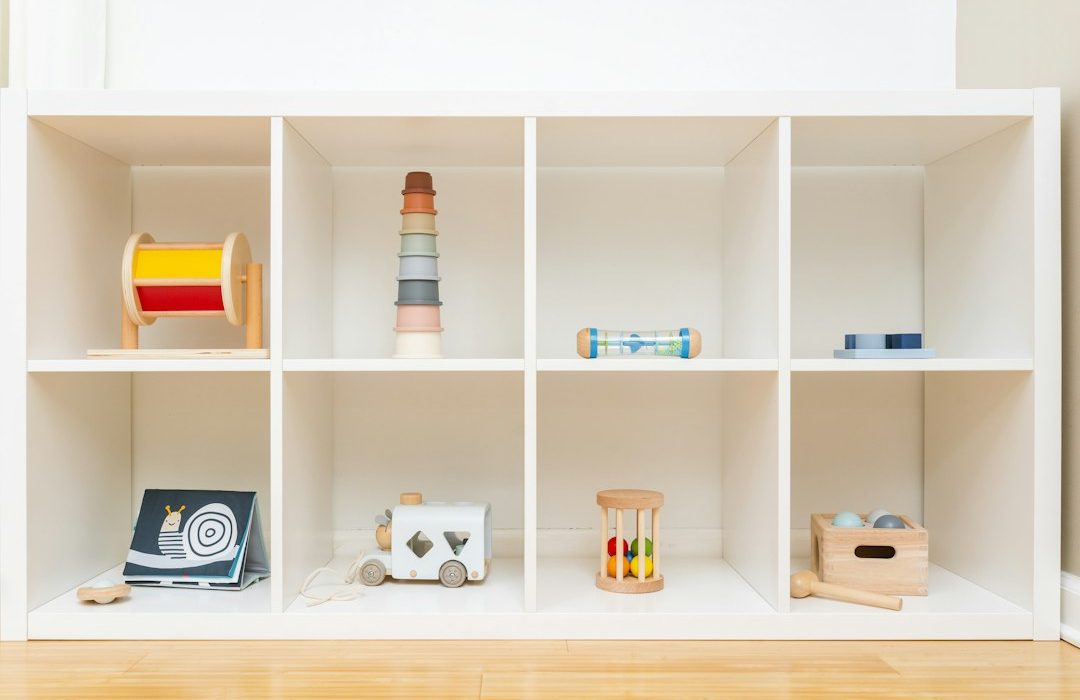
Cube organizer shelves, epitomized by popular models like IKEA’s KALLAX and ClosetMaid’s units, are modular furniture pieces featuring a grid of open or closed cubbies. Their primary appeal lies in their versatility and customizable nature. Cubbies can house fabric bins, drawers, or be left open, allowing for flexible storage solutions. This open-shelf design inherently promotes visibility, making it easier to see the contents of each cube, especially when bins are transparent or intentionally curated. The compartmentalization naturally lends itself to sorting toys by type or category, which can streamline tidying up and toy rotation. However, this structured approach demands a certain level of organization from the outset. Without bins or clear labeling, open cubes can quickly become cluttered and defeat the purpose of visibility. The furniture itself can also be bulky and may require assembly, a potential con for some users.

Pros of Cube Organizer Shelves
- Enhanced visibility due to open compartments or clear bins.
- Facilitates easy categorization and sorting of toys.
- Modular and customizable with various bin/drawer inserts.
- Can double as display shelves for select items.
- Modern aesthetic can integrate well with home decor.
- Supports structured toy rotation by dedicating cubes to specific toy sets.
Cons of Cube Organizer Shelves
- Can become cluttered if not maintained with bins or labels.
- Requires assembly, which can be time-consuming.
- Some units may lack the robust durability for very rough play environments.
- Can be more expensive upfront compared to a basic toy box.
- Less effective for very large or oddly shaped toys that don’t fit standard cube dimensions.
Deconstructing Traditional Toy Boxes: Strengths and Weaknesses
Traditional toy boxes, whether simple wooden chests, plastic bins, or hinged lid designs, offer a straightforward solution: a large, open container for toy storage. Their main strength is simplicity. They require no assembly and can often accommodate a large volume of toys, including bulky items, with minimal fuss. For families who prefer a ‘dump and go’ approach to tidying, a toy box is undeniably easier to manage in the short term. The open-top design allows for quick dumping of toys, and the large capacity means less need for meticulous sorting. However, this simplicity is also their greatest downfall. Visibility is notoriously poor; toys buried at the bottom are easily forgotten, and finding specific items can be a frustrating endeavor. Implementing toy rotation becomes a laborious process of excavating and re-burying toys. Furthermore, the large, undifferentiated space can encourage mess, with toys spilling out or becoming jumbled into an unmanageable heap. Safety is also a concern with older models that might have heavy lids lacking safety hinges.

Pros of Traditional Toy Boxes
- Simple to use; no assembly required.
- High capacity for large or numerous toys.
- Can be more budget-friendly for basic models.
- Easy for children to dump toys into for quick tidying.
- Accommodates oversized toys more readily.
Cons of Traditional Toy Boxes
- Poor toy visibility leads to forgotten items and difficult retrieval.
- Toy rotation is cumbersome and inefficient.
- Can easily become a chaotic dumping ground.
- Aesthetic can be less refined, often looking like clutter.
- Safety concerns with heavy lids on some models.
- Less opportunity for categorizing or displaying specific toys.
Visibility: Seeing What You Own with Cube Organizers
The concept of “toy visibility” extends beyond simply seeing toys; it’s about making them accessible and known. This is where cube organizers often shine, fundamentally altering how children and parents interact with the toy collection.
How Cube Shelves Enhance Toy Visibility
Cube organizers, especially those with open fronts or paired with transparent or fabric bins, offer a significant advantage in visibility. Each cube acts as a distinct container, allowing children to see the contents at a glance. When toys are sorted logically – for instance, all building blocks in one cube, all art supplies in another, and a specific set of figures in a third – children can quickly identify what they want to play with. This visual clarity reduces frustration and encourages independent play, as children are less likely to ask for help finding a specific item. Furthermore, when bins are used, a quick glance can reveal what’s inside, or labels can be added for even greater clarity. This transparency is invaluable for toy rotation, as parents can easily see which categories are “in play” and which are stored away, making the rotation process intuitive rather than a deep excavation.
The Visibility Drawbacks of Traditional Toy Boxes
The inherent design of a traditional toy box, typically a large, single-compartment bin, presents a significant visibility challenge. Toys are often piled high, creating a jumbled mess where smaller items can easily become lost or buried. Children might rummage through the entire box, disrupting even the toys they don’t intend to play with, simply to find one specific item. This lack of order means that many toys are effectively invisible, leading to underutilization and a distorted perception of the actual toy collection. For parents, identifying which toys are available for rotation or simply assessing the extent of the collection becomes a daunting task, often requiring a complete emptying and sorting of the entire box – a chore few have the time or inclination to perform regularly.

Toy Rotation Strategies: Which System Wins?
Effective toy rotation is key to maintaining children’s interest, promoting focused play, and preventing toy overload. The storage system chosen plays a pivotal role in how successfully this strategy can be implemented.
Implementing Effective Toy Rotation with Cube Shelves
Cube organizers are exceptionally well-suited for toy rotation. The compartmentalized nature allows parents to dedicate specific cubes or bins to particular toy categories or sets. For a rotation strategy, a family might decide to have two sets of toys “in play” at any given time. This could mean dedicating four cubes for current play: one for building toys, one for imaginative play figures, one for art supplies, and one for puzzles. The remaining toys would be stored in bins on higher shelves, in closets, or in designated storage elsewhere. When it’s time to rotate, the parent can easily swap out one set of cubes for another, bringing fresh toys into play and storing away those that have been out for a while. The visibility of the cube system means children can often see the “new” toys being introduced, building anticipation. Labeling cubes with images or text further simplifies the process for both children and adults.
Challenges of Toy Rotation in Traditional Toy Boxes
Toy rotation with a traditional toy box is significantly more challenging. Because all toys are stored together in one large space, the act of “rotating” often involves emptying the entire box, selecting a subset of toys to put back in, and storing the rest elsewhere. This is labor-intensive and can be disruptive. Children may protest the removal of favorite toys or become confused by the constant change. The lack of clear separation means that even toys intended to be “put away” might get mixed back in during play. Without distinct containers for different toy types, identifying which toys haven’t been played with recently becomes difficult, making it harder to curate the rotation effectively. The entire process can feel more like a chore than a beneficial organizational strategy.
Space Optimization & Home Aesthetics
Beyond functionality, toy storage solutions impact the overall living space and its visual appeal. The right system can enhance a room, while the wrong one can contribute to clutter.
Maximizing Playroom Space with Cube Organizer Solutions
Cube organizer shelves are designed with space optimization in mind. Their typically rectangular, vertical design allows for efficient use of wall space, minimizing their footprint compared to sprawling toy chests. Many units are available in various configurations – tall and narrow, short and wide – allowing them to fit into diverse room dimensions. The modularity means a system can be expanded or reconfigured as needs change. When used with appropriate-sized bins, they create a neat, uniform appearance, preventing the visual chaos that often accompanies open toy storage. For families with limited space, cube organizers can often be integrated into existing furniture arrangements or serve dual purposes, such as a room divider or a base for a television. The ability to stack certain units also maximizes vertical storage potential.
The Aesthetic Impact: Clutter vs. Curated Display
The aesthetic impact of toy storage is often overlooked but is crucial for maintaining a harmonious home environment. Traditional toy boxes, while functional, rarely contribute positively to a room’s decor. They tend to look like large, utilitarian containers, and when overflowing, they become a significant source of visual clutter. In contrast, cube organizers, particularly when paired with stylish fabric bins or used to display select toys or decorative items, can enhance a room’s aesthetic. The clean lines and organized compartments of a cube unit can create a sense of order and intentionality. Families can curate what is visible, choosing to display attractive toys or books while keeping less visually appealing items neatly tucked away in bins. This transforms toy storage from a necessary evil into an integrated part of the home’s design, contributing to a more polished and serene living space.

Durability, Safety, and Child-Friendliness
When choosing any item for a child’s environment, durability, safety, and ease of use are paramount considerations.
Assessing the Longevity of Cube Organizers
The durability of cube organizers varies significantly by brand and material. Well-constructed units, often made from particleboard or MDF with a laminate finish, can be quite sturdy and withstand moderate use for many years. However, cheaper models may be prone to chipping, scratching, or sagging under weight. The individual cubbies, especially if left open, can be susceptible to wear and tear from enthusiastic play. For families with very active children or those who might climb on furniture, anchoring the unit to the wall is a crucial safety and longevity measure. The modular nature can be a double-edged sword: while it allows for easy replacement of damaged parts, it also means a single damaged unit might disrupt the entire configuration if not managed carefully.
Safety Features: What to Look For in Both Systems
Safety is non-negotiable. For cube organizers, look for units that are stable and can be securely anchored to a wall to prevent tipping, especially if children are prone to climbing. Ensure there are no sharp edges or pinch points, particularly in drawer or door mechanisms if applicable. For traditional toy boxes, the primary safety concern is the lid. Opt for models with lightweight lids, slow-closing mechanisms, or no lids at all. Hinged lids should have safety stays to prevent them from slamming shut on little fingers. Rounded edges are also a must. For both systems, ensure materials are non-toxic and free from harmful chemicals, which is standard for most reputable brands today.
Ease of Use for Little Hands
Cube organizers, when used with open bins or bins that slide out easily, are generally child-friendly. Children can grasp toys from open cubes or pull out bins to access their contents. The defined spaces make it intuitive for them to learn where different toys belong, aiding in the tidying process. However, if fabric bins are too snug within the cubes, they can be difficult for very young children to remove or replace. Traditional toy boxes, particularly those with large openings, allow children to easily dump toys in and pull them out, requiring minimal fine motor skills or complex manipulation. The ease of use for a toy box is high for immediate access and ‘dumping’ tidying, but low for organized retrieval and specific toy selection.
Real-World Solutions: Top Cube Organizers and Toy Boxes for 2026
Choosing the right product involves looking at established brands known for quality and thoughtful design in the toy storage market.
Top-Rated Cube Organizer Shelves (e.g., IKEA Kallax, ClosetMaid)
The IKEA KALLAX series remains a dominant force, offering immense versatility with its range of sizes and compatibility with numerous storage inserts (bins, drawers, doors). Its affordability and widespread availability make it a go-to for many. ClosetMaid’s ShelfTrack or Ventilated Wire Shelving Systems can also be adapted for toy storage, offering a more integrated closet or pantry solution. For a more robust, furniture-like option, brands like Way Basics offer modular cube shelves made from eco-friendly materials that are easy to assemble. These systems typically range from $50 to $300 depending on size and configuration.
| Feature | IKEA KALLAX (4-Cube Unit) | ClosetMaid Modular Storage Organizer (8-Cube) | Way Basics Cube Storage Shelf |
|---|---|---|---|
| Approx. Price Range | $50 – $80 | $70 – $120 | $60 – $100 |
| Material | Particleboard, Fiberboard, Plastic edging | Powder-coated steel, Plastic connectors | Eco-friendly zBoard, non-toxic |
| Dimensions (approx. WxHxD) | 30.375″ x 30.375″ x 15.375″ | 30.3″ x 58.7″ x 11.8″ | 26.6″ x 26.6″ x 11.8″ |
| Cube Opening Size (approx.) | 13″ x 13″ x 15″ | 13″ x 13″ x 11.5″ | 11.75″ x 11.75″ x 11.5″ |
| Assembly Required | Yes | Yes | Yes (tool-free) |
| 👍 Pros | Affordable, versatile inserts, large ecosystem | Durable, easy to clean, good for garages/playrooms | Lightweight, tool-free assembly, eco-friendly |
| 👎 Cons | Particleboard durability, can sag with heavy weight | Less aesthetically refined, wire can bend | Can be less sturdy than wood-based options for heavy loads |
Popular Traditional Toy Box Picks (e.g., Humble Crew, Delta Children)
Humble Crew’s toy organizers and storage bins are known for their clean designs and affordability, often featuring multiple bins or a simple wooden box. Delta Children offers a wide range of toy storage solutions, including sturdy wooden toy chests and plastic bins, often with character themes that appeal to children. Prices for these typically range from $40 to $150, depending on size, material, and features like lids.
| Feature | Humble Crew Playtime 3-Bin Organizer | Delta Children Deluxe Toy Box | KidKraft Wooden Toy Box Bench |
|---|---|---|---|
| Approx. Price Range | $40 – $70 | $60 – $100 | $90 – $130 |
| Material | MDF Wood Composite, Fabric Bins | MDF Wood Composite | MDF Wood Composite |
| Dimensions (approx. WxHxD) | 37″ x 23.6″ x 12″ | 30.8″ x 20.3″ x 12.5″ | 31″ x 20.5″ x 17.5″ |
| Key Features | 3 open storage bins, can be used as bench | Safety hinge lid, large capacity, bench seating | Safety lid, can be used as a bench, decorative molding |
| Assembly Required | Yes | Yes | Yes |
| 👍 Pros | Good bin organization, compact, multi-functional | Safe lid mechanism, ample storage, classic design | Durable, attractive bench design, good capacity |
| 👎 Cons | Bins can be flimsy for heavy items, requires assembly | Can be heavy, lid still requires caution | Heavier, more expensive, lid still requires caution |
Making the Right Choice for Your Family’s Needs
The ultimate decision between cube organizers and traditional toy boxes hinges on a family’s priorities regarding organization, space, aesthetics, and engagement with their children’s play habits.
Key Considerations for Your Decision
For the highly organized family or those seeking a streamlined aesthetic: Cube organizers are likely the superior choice. Their modularity, visibility, and potential for curated display align with a desire for order and a polished home environment. They excel at supporting structured toy rotation. This is Best for families who value intentionality and are willing to invest a bit more time in setup and ongoing maintenance.
For families prioritizing simplicity, large capacity, and quick tidying: Traditional toy boxes might be a better fit, especially if the children are younger or the emphasis is on simply getting toys out of sight quickly. If the home’s aesthetic is more relaxed and space is not a primary constraint, a large toy box can be a practical, albeit less organized, solution. This is Best for families who prefer a more laid-back approach to toy management and have children who might struggle with more structured systems.
Consider the child’s age and developmental stage. Younger children may benefit from the simplicity of a large toy box, while older children can often engage with the organizational structure of cube shelves, learning valuable sorting and tidying skills. The ability to reach and manage toys independently is crucial.
Factor in the type of toys. If the collection is dominated by very large, irregularly shaped items, a toy box may be more accommodating. For collections with many smaller items, figures, blocks, or art supplies, cube organizers with bins offer superior management.
Integrating Your Chosen System for Maximum Impact
Regardless of the system chosen, successful toy management involves more than just the furniture. For cube organizers, invest in good quality bins (fabric, clear plastic, or wood) that fit the cubes snugly but are still easy for children to operate. Implement a clear labeling system, using pictures for pre-readers and simple text for older children. Regularly review the toy collection, decluttering items that are broken, outgrown, or no longer played with. For traditional toy boxes, consider using smaller bins or baskets *inside* the toy box to create some semblance of organization. Regularly schedule “toy box clean-outs” where you empty, sort, and put away toys, reinforcing the habit of toy rotation and decluttering. Involve children in the tidying process, making it a shared responsibility rather than a parental chore. Ultimately, the most effective system is one that is consistently used and adapted to the family’s evolving needs.
👑 Ultimate Winner: Cube Organizer Shelves
For families in 2026 aiming for a blend of organization, visibility, and aesthetic appeal, Cube Organizer Shelves emerge as the superior solution. Their inherent design promotes better toy visibility, making it easier for children to find and choose toys, and significantly streamlining the often-dreaded task of toy rotation. The compartmentalized structure encourages categorization, fostering tidiness and teaching children valuable organizational skills from an early age. While they require a slightly higher upfront investment in time for assembly and potentially bins, the long-term benefits in terms of reduced clutter, enhanced play engagement, and a more visually pleasing home environment are undeniable. They offer a flexible, adaptable system that can evolve with a child’s changing needs and interests, making them a truly strategic choice for modern family living. This system is Best for parents who prioritize order, ease of toy rotation, and integrating storage into their home’s decor, offering a clear path to a more manageable and visually appealing play space.